Missed rig checks go unnoticed
Scheduled checks create a dated obligation, and missed ones are flagged to the alert roles.
Build your department’s checks once — sections, pass/fail items, readings with limits, quantities, and required notes — and schedule them daily, every N days, weekly, monthly, or yearly. Each check is shared work the crew logs in batches, and failed items become alerts that move through repair until the unit is back in service.
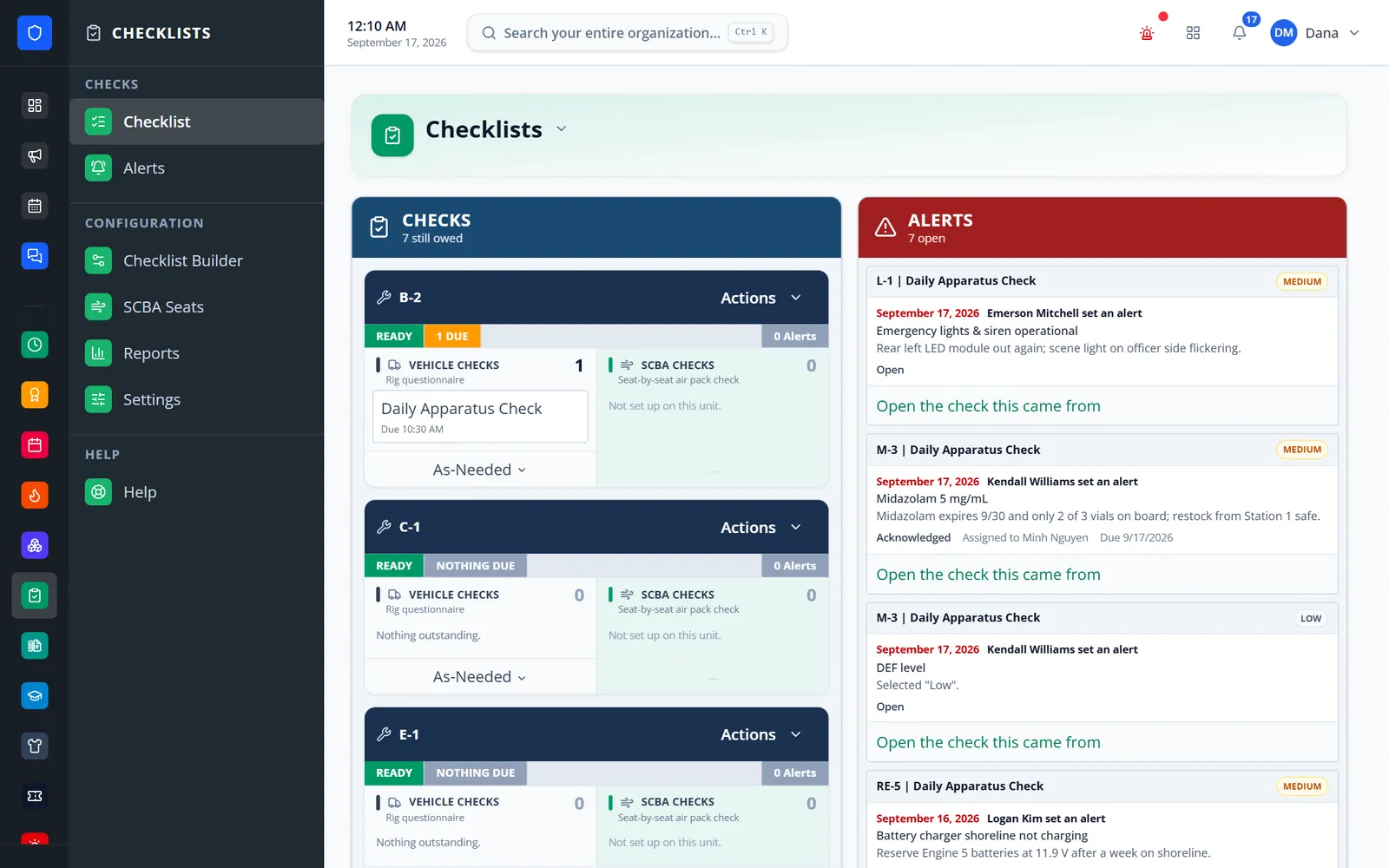
Truck, SCBA, and PPE checks the whole crew works together, with schedules, missed-check tracking, and failed items that become repair alerts.
Scheduled checks create a dated obligation, and missed ones are flagged to the alert roles.
A failed item becomes an alert with severity, photos, an out-of-service flag, and an owner.
The whole crew logs into the same check in batches.
Checklist versions are immutable, completed checks keep their snapshot, and reports export to CSV and PDF.
Each step hands its context to the next instead of sending people back to a spreadsheet, inbox, or paper form.
Sections, item types, schedule, target, and which roles receive alerts.
Crews tap a unit’s card to open the shared check.
Mark items, scan a barcode to jump to one, and add notes and photos to failures.
Alerts move from acknowledged to awaiting parts to resolved, with cost and work-order references.
Real screens from the product, shown with a sample department.
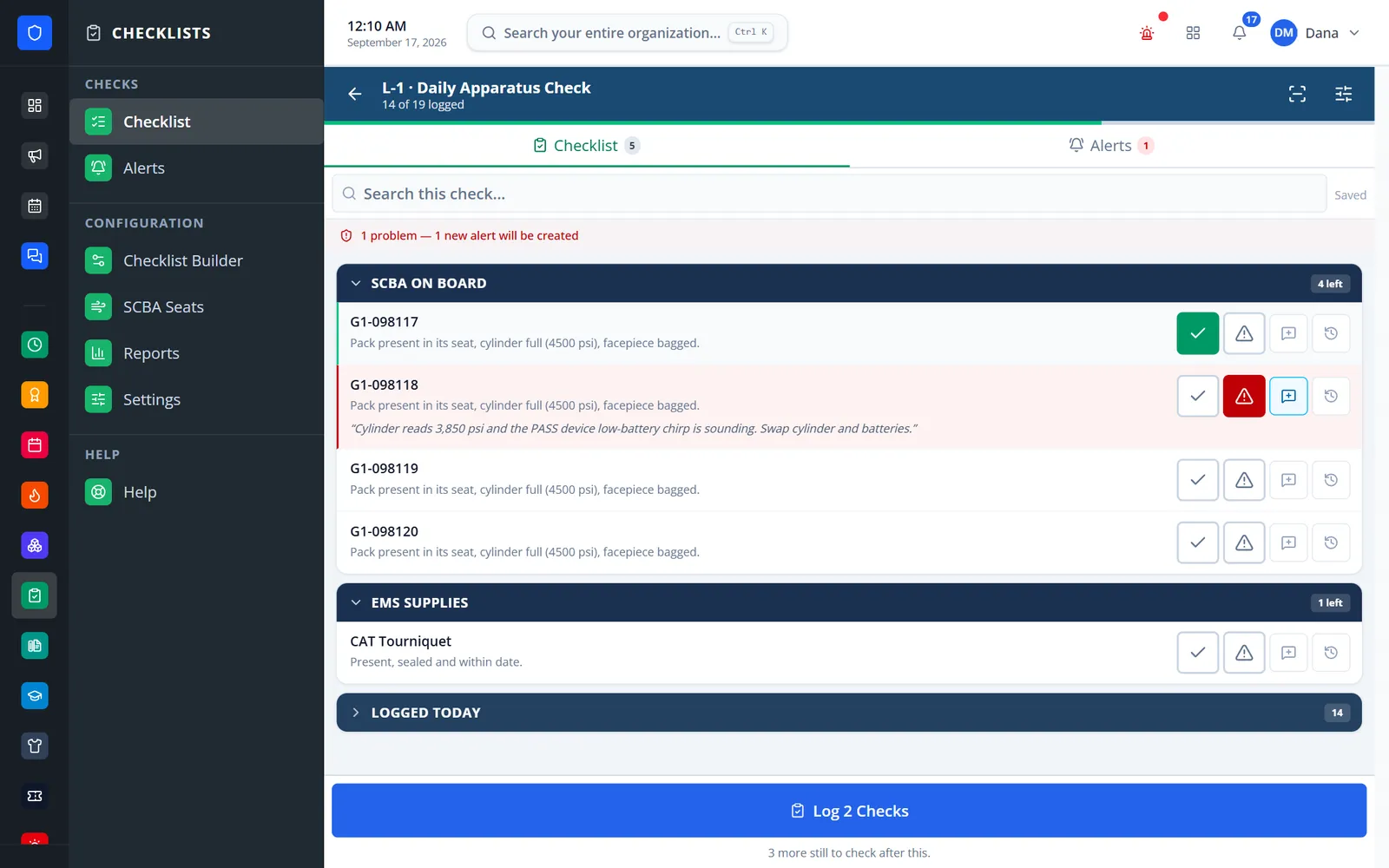
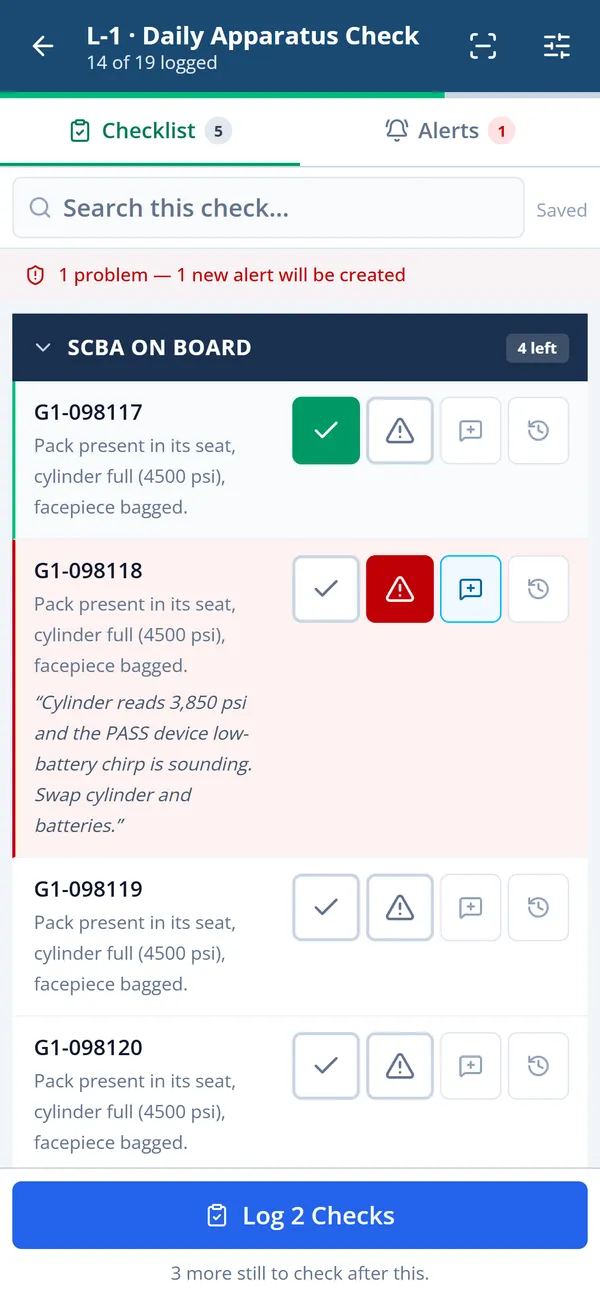
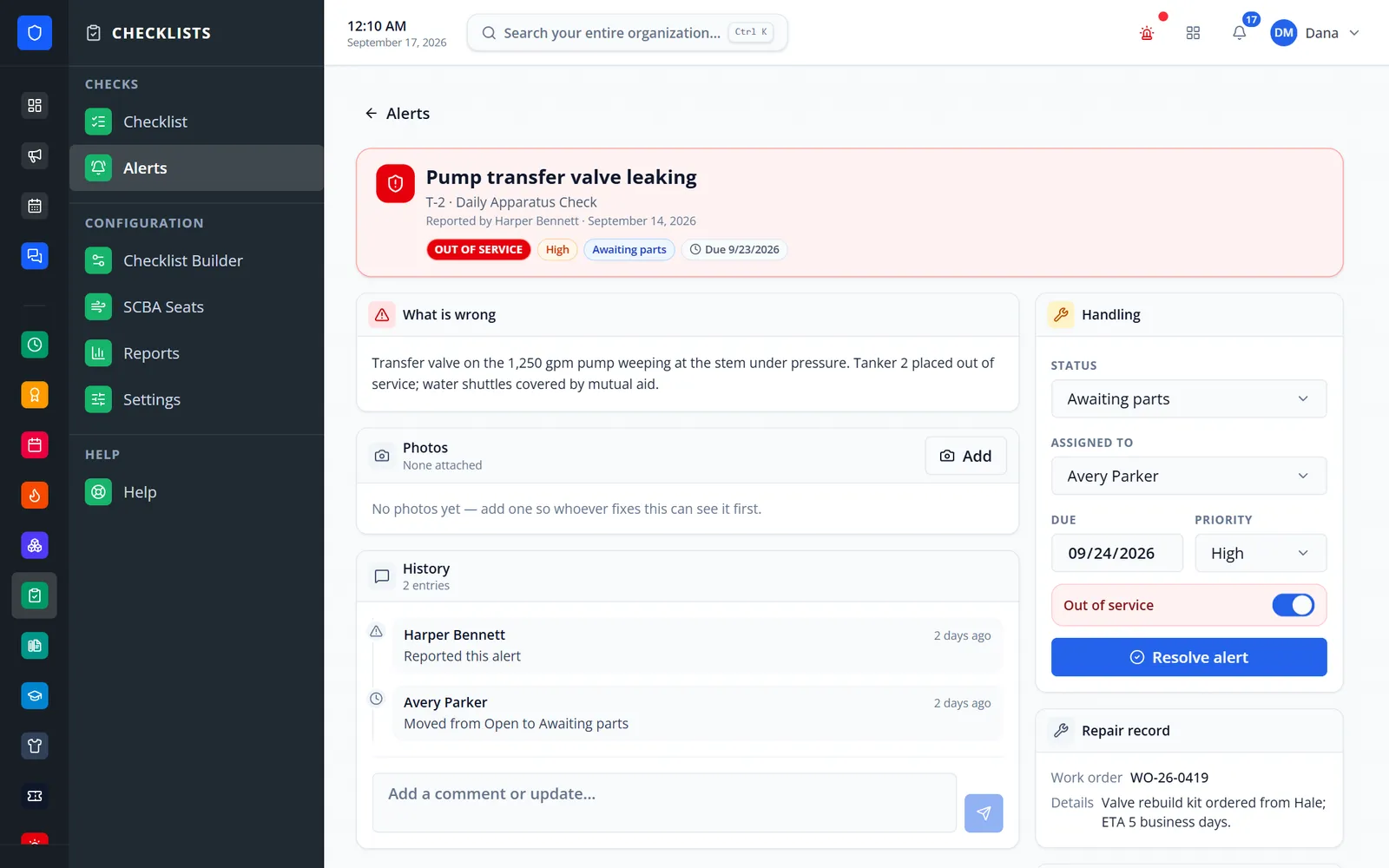
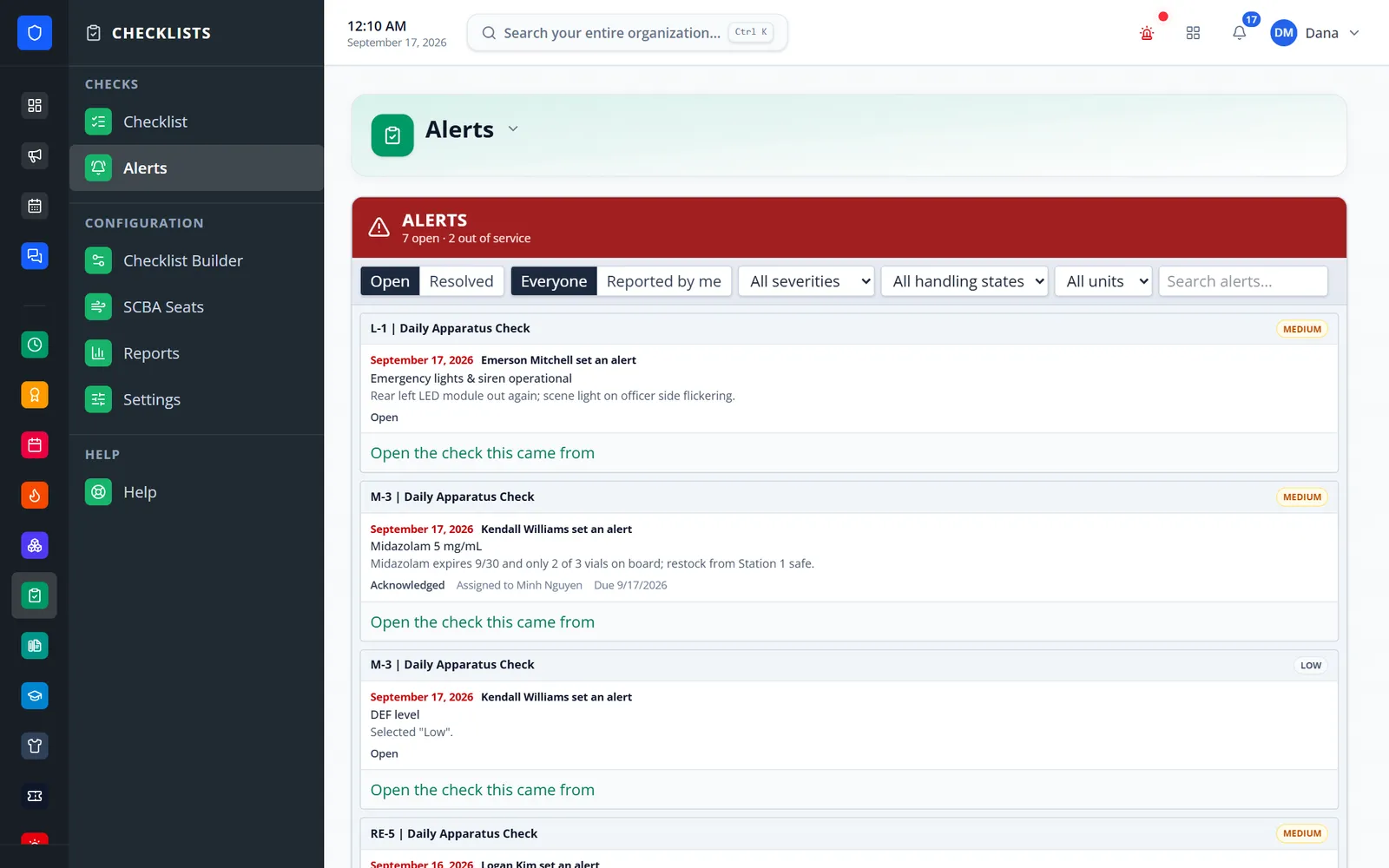
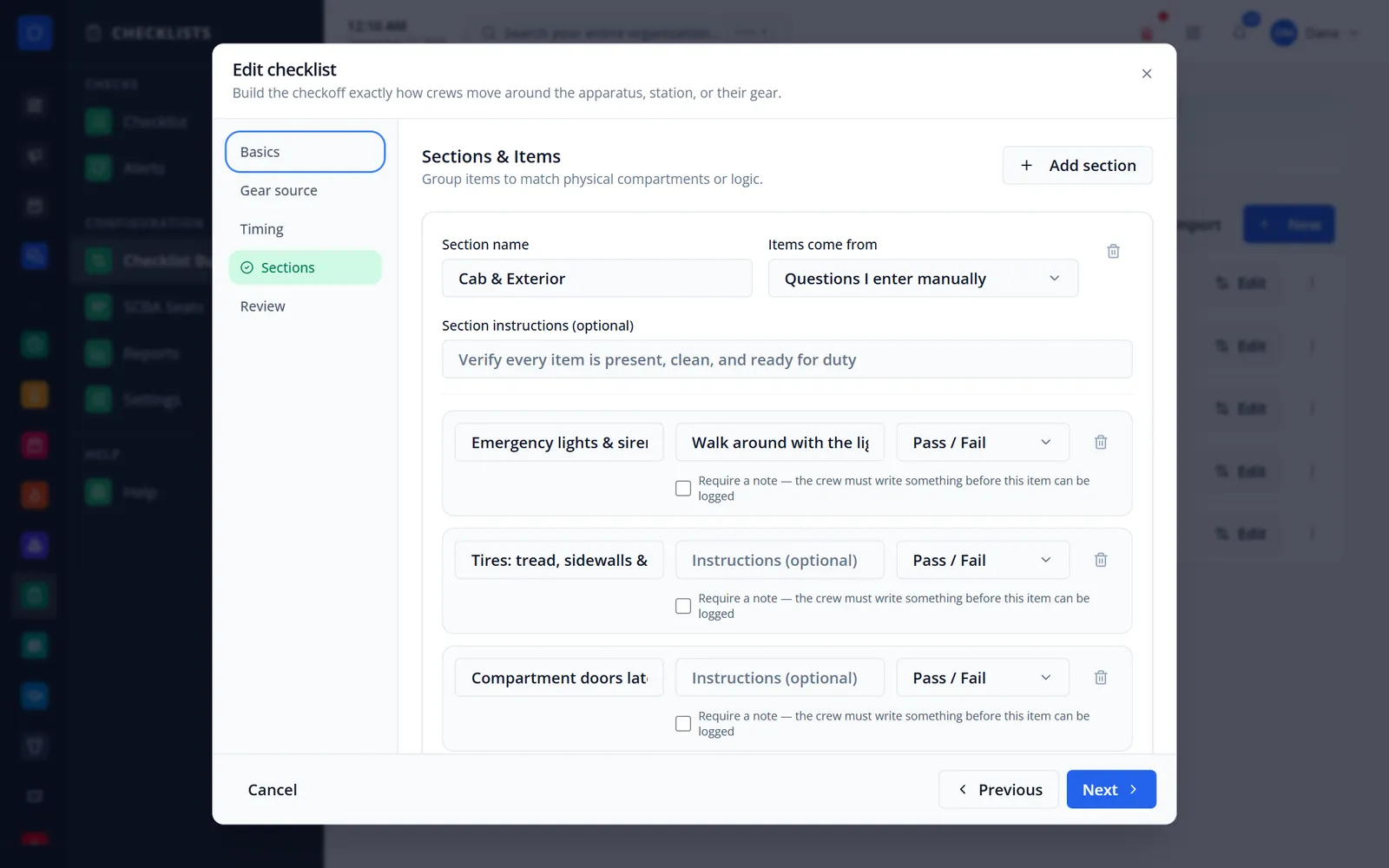
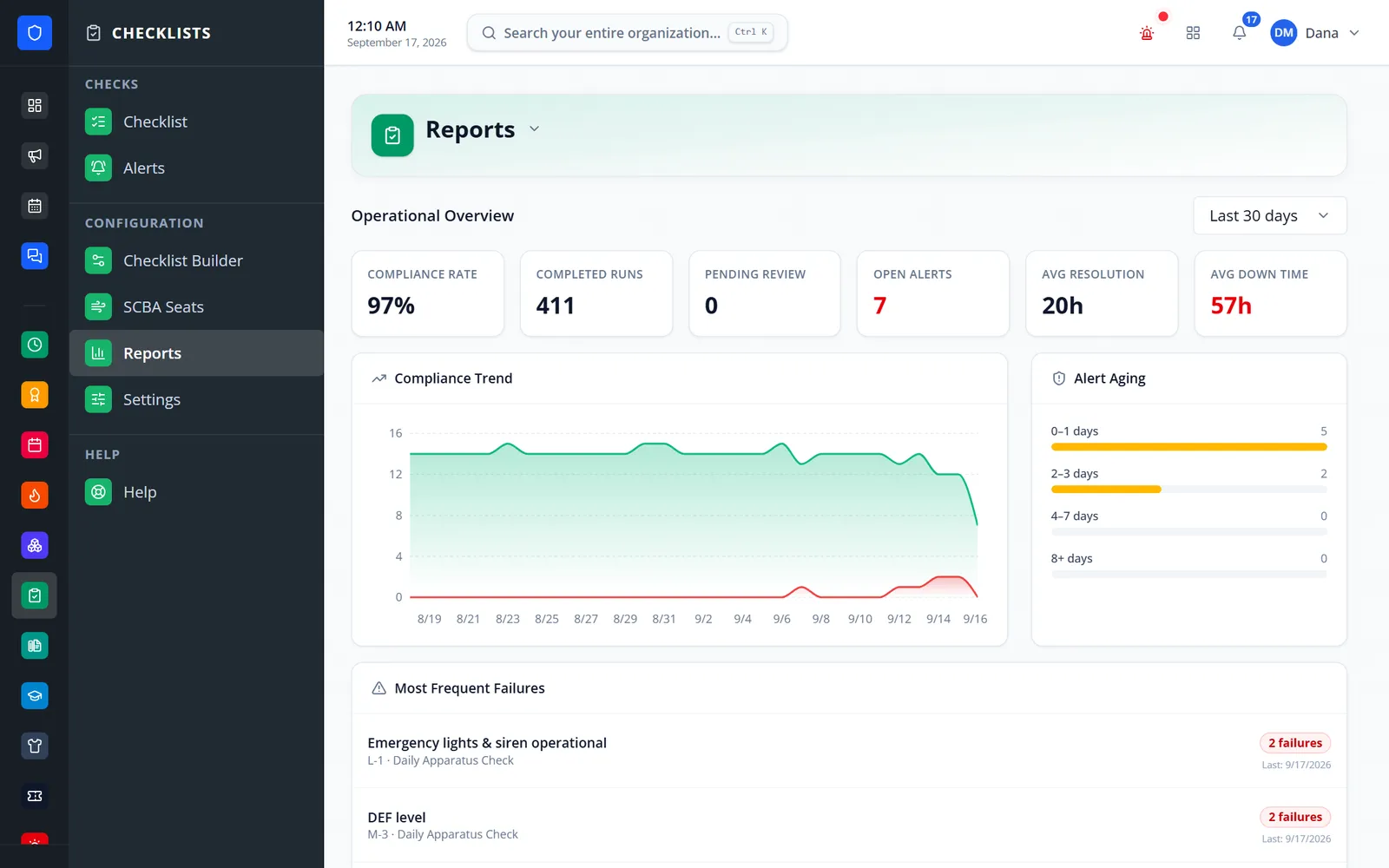
The member experience, administrative controls, and accountability tools to run the workflow end to end.
Daily, every N days, weekly, monthly, quarterly, twice a year, or yearly — with open and due-by times.
One check for the department, one per apparatus, or one per member for PPE.
Check, quantity, readings with automatic pass/fail, date, text, and choice.
Seat-by-seat pack, cylinder, and facepiece checks with PSI readings and air-fill logging.
Severity, up to 10 photos, out-of-service flags, and re-notification while open.
Camera photos, barcode scanning, and answers queued if the signal drops.
Claimed checks, supervisor review, and a typed-name attestation on completion.
Compliance rate and trend, an audit list, and CSV/PDF exports.
Members keep one secure identity and one set of role permissions across every module your department turns on.
No. Manual-question checklists work on their own. With Assets on, checks can target and update asset workspaces.
Answers are queued on the device and sent when the connection returns. Photos need a connection.
We build custom modules. Tell us what you track today, who touches it, and what a good outcome looks like — we’ll scope a module that lives inside the same portal, permissions, and member accounts.
Tell us how you handle this work today. We’ll walk through the module in the context of the complete Station Clipboard portal.