September 11, 2001: Remembering the First Responders Who Answered the Call
Remember the firefighters, EMTs, paramedics, and first responders of September 11, 2001. Learn about the Fire & EMS response, sacrifice, and lasting legacy.
September 11 is a date permanently woven into the history of the American fire and emergency services.
On the morning of September 11, 2001, first responders began what they expected to be another day of serving their communities. Within minutes, firefighters, EMTs, paramedics, police officers, dispatchers, and emergency personnel were responding to events unlike anything they had experienced before.
Many ran toward buildings while thousands of others were trying to get out.
Today, we remember the 2,977 people killed in the September 11 attacks. We remember the passengers and crews aboard the four aircraft, those working in and visiting the World Trade Center and Pentagon, and especially, as members and supporters of the Fire & EMS community, the first responders who answered the call.
We also remember the countless responders, recovery workers, families, departments, and communities whose lives were forever changed by that day.
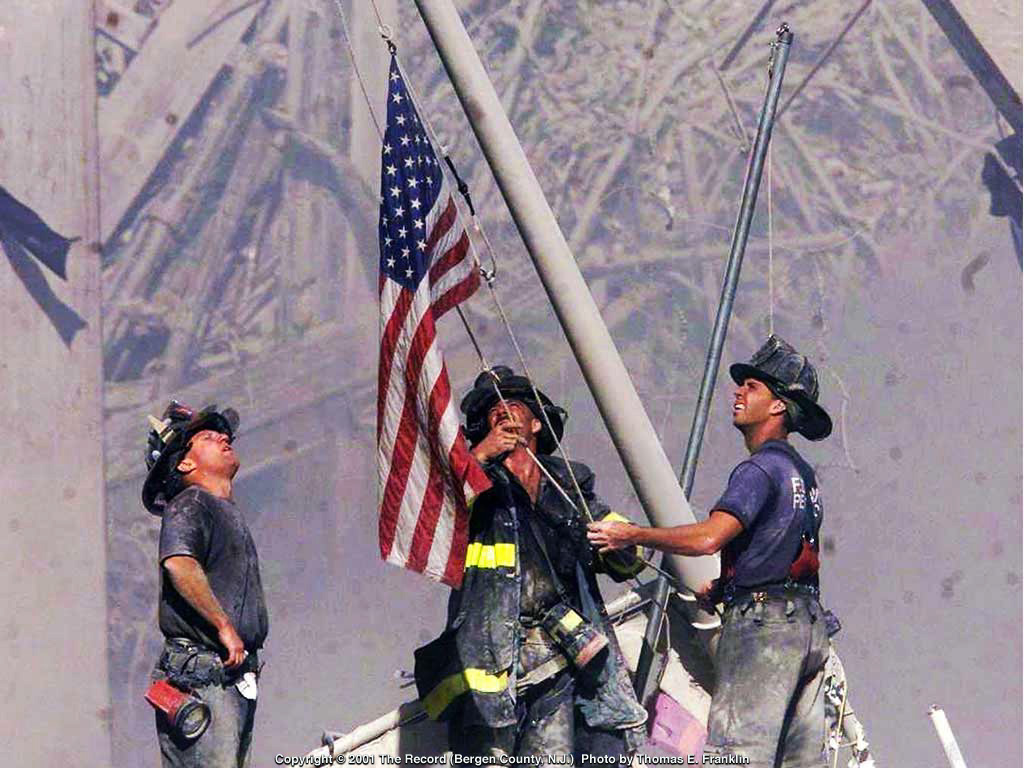
What Happened on September 11, 2001?
On the morning of September 11, 2001, 19 terrorists from al-Qaeda hijacked four commercial airplanes.
At 8:46 a.m., American Airlines Flight 11 struck the North Tower of the World Trade Center in New York City.
At 9:03 a.m., United Airlines Flight 175 struck the South Tower.
At 9:37 a.m., American Airlines Flight 77 struck the Pentagon in Arlington, Virginia.
At 9:59 a.m., the South Tower collapsed.
At 10:03 a.m., United Airlines Flight 93 crashed near Shanksville, Pennsylvania, after passengers and crew fought back against the hijackers.
At 10:28 a.m., the North Tower collapsed.
In less than two hours, the attacks had taken 2,977 lives. The victims came from 90 nations. [1]
The Fire & EMS Response
When Flight 11 struck the North Tower, FDNY Battalion Chief Joseph Pfeifer was already nearby, investigating a reported gas leak with members of Engine Company 7 and Ladder Company 1.
They heard the aircraft overhead and watched it strike the tower.
Chief Pfeifer immediately transmitted a second alarm and, within approximately two minutes, a third alarm that called additional engine companies, ladder companies, chiefs, and specialized units to the World Trade Center. [2]
What followed became one of the largest and most difficult emergency responses in American history.
Firefighters climbed the towers carrying tools, hose, medical equipment, air cylinders, and other gear while occupants descended the stairwells.
EMS personnel established operations to treat the injured and prepare for potentially enormous numbers of patients.
According to the National September 11 Memorial & Museum, roughly 200 EMTs and paramedics were at the World Trade Center when the towers fell, with hundreds more EMS personnel arriving by that evening. [3]
The scale of the incident was almost unimaginable.
343 FDNY Firefighters
The Fire Department of the City of New York lost 343 firefighters on September 11, 2001. [4]
It remains one of the most devastating losses in the history of the American fire service.
They included firefighters, company officers, chiefs, veteran members, and relatively new members of the department.
The loss went far beyond a number.
The 9/11 Memorial & Museum notes that those 343 firefighters represented approximately 4,400 years of cumulative training, experience, and knowledge. [5]
Entire firehouses lost members.
Families lost husbands, wives, fathers, mothers, sons, daughters, brothers, sisters, and friends.
The FDNY lost an extraordinary amount of leadership and institutional experience in a single morning.
And yet the department still had a city to protect.
In the days and months that followed, FDNY members continued providing emergency services throughout New York City while simultaneously participating in rescue and recovery operations and supporting the families and firehouses that had suffered unimaginable losses. [6]
EMS on September 11
The EMS response is another important part of the story.
Before the towers collapsed, EMS personnel were establishing treatment areas, triaging patients, moving the injured, coordinating ambulances, and preparing for what responders believed could become a massive casualty incident.
The 9/11 Memorial & Museum reports that there were initially 24 EMT supervisors, 29 Advanced Life Support units, and 58 Basic Life Support units at the scene.
Approximately 200 EMTs and paramedics were present when the towers fell. [3]
They worked alongside firefighters, police officers, Port Authority personnel, dispatchers, hospital staff, emergency managers, and responders from numerous other agencies.
September 11 demonstrated something the Fire & EMS community understands particularly well:
Large incidents are never handled by one person, one apparatus, one station, or even one agency.
They require people working together.
The Challenges Responders Faced
The response to the World Trade Center also became the subject of extensive study.
The National Institute of Standards and Technology (NIST) later examined the buildings, evacuation, emergency response, communications, and other aspects of the disaster.
NIST found that responders faced significant command-and-control and communications challenges.
Responders did not always have adequate information about conditions inside the towers or a complete picture of what was happening throughout the World Trade Center complex. Communications were strained by the enormous volume of activity and limitations of some equipment and systems. [7]
The scale of the incident exceeded anything those responders had previously confronted.
Yet they continued operating.
They climbed.
They treated patients.
They evacuated civilians.
They searched.
They communicated what information they had.
And they continued doing their jobs under extraordinary circumstances.
What September 11 Means to the Fire Service
For those in Fire & EMS today, September 11 isn't simply a chapter in a history book.
Its influence can still be seen throughout the emergency services.
It is present in conversations about:
- Interoperable communications
- Incident command
- Accountability
- High-rise operations
- Mutual aid
- Mass-casualty response
- Emergency preparedness
- Building evacuation
- Responder health and safety
- Training
- Leadership
But perhaps the most enduring part of September 11 isn't procedural.
It's cultural.
The fire service remembers its own.
Every September, departments across the country hold memorial ceremonies, stair climbs, moments of silence, apparatus displays, and other commemorations.
Some firefighters climb 110 stories in remembrance of those who climbed the World Trade Center towers.
Others read the names of the fallen.
Some simply stand together at the station.
The form of remembrance may differ.
The purpose doesn't.
Never Forget Is More Than a Phrase
For younger firefighters and EMTs entering the service today, September 11, 2001 happened before some of them were born.
That makes telling the story increasingly important.
"Never Forget" means remembering the people behind the numbers.
It means understanding why 343 is significant to the fire service.
It means remembering the EMTs, paramedics, law enforcement officers, dispatchers, emergency workers, civilians, passengers, and crew members whose lives were lost or forever changed.
It means listening to the experiences of those who were there.
And it means passing those stories to the next generation.
To Those Who Answer the Call
At Station Clipboard, we spend our days building software for Fire & EMS departments.
That means the people we serve are the same people who get out of bed when the tones drop.
The people who leave dinner.
The people who miss holidays.
The volunteers who drive to the station when everyone else is driving away.
The career crews beginning another shift without knowing what that shift will bring.
The EMTs and paramedics caring for strangers on some of the worst days of their lives.
September 11 reminds us of the responsibility carried by those who choose this profession.
So today, there is no product pitch.
Just remembrance.
To the 2,977 people who were killed.
To the 343 FDNY firefighters who never returned to their firehouses.
To the EMTs, paramedics, police officers, dispatchers, emergency personnel, recovery workers, and countless others who responded.
To their families.
And to every Fire & EMS professional who continues to answer the call today:
We remember.
We honor.
We will never forget.
Sources
[1] National September 11 Memorial & Museum — 9/11 FAQs
The Memorial documents the four coordinated attacks, timeline, locations, and 2,977 victims from 90 nations.
[2] National September 11 Memorial & Museum — Chief Joseph Pfeifer / Battalion 1 Fire Helmet Collection
Documents Chief Pfeifer's initial response and escalation of the FDNY alarm assignment after Flight 11 struck the North Tower.
[3] National September 11 Memorial & Museum — FDNY EMTs and the EMS Response to 9/11
Documents the initial EMS deployment and estimates of EMTs and paramedics responding to the World Trade Center.
[4] National Institute of Standards and Technology — World Trade Center Investigation
NIST's investigation records the deaths of 343 New York City firefighters in the World Trade Center attacks.
[5] National September 11 Memorial & Museum — William Feehan: Remembering a Firefighter Who Held Every Rank
Discusses the 343 FDNY firefighters and the approximately 4,400 cumulative years of experience represented by those members.
[6] National September 11 Memorial & Museum — Rebuilding After 9/11: How FDNY Was Forever Changed
Documents the losses suffered by FDNY and the challenges the department faced while continuing emergency operations and rescue and recovery work.
[7] National Institute of Standards and Technology — World Trade Center Disaster Investigation
Documents findings concerning emergency communications, command and control, evacuation, and first-responder operations.